Investing in the Shadows: 'Picks and Shovels' Companies Powering AI and EV Growth
Discover the 'picks and shovels' strategy, focusing on essential infrastructure providers in AI, EVs, and biotech rather than headline-grabbing end-product companies. These less visible companies, like Applied Materials and Texas Instruments, may offer asymmetric upside by enabling multiple industry leaders.
Strategic Analysis: The "Picks and Shovels" Infrastructure Play
The "picks and shovels" investment strategy is a time-tested approach that shifts focus from the high-profile companies producing end-consumer goods to the indispensable providers of the tools, materials, and infrastructure required for those products to exist. In the current market landscape, characterized by rapid advancements in Artificial Intelligence (AI), Electric Vehicles (EVs), and Life Sciences, identifying these secondary-layer companies may offer a way to capture sector-wide growth while mitigating the volatility associated with individual "winner-take-all" brand competitions.
Sector Overview: Enabling Global Mega-Trends
Infrastructure providers often operate with high barriers to entry, such as massive Research and Development (R&D) requirements or control over scarce physical resources. By serving as an "agnostic" winner—selling to all major players in a field simultaneously—these companies can potentially achieve more stable long-term positioning.
1. Artificial Intelligence and Semiconductor Foundations
The AI revolution is not merely about software; it is physically constrained by hardware fabrication, testing, and power management. Companies like Applied Materials ($AMAT) and Tower Semiconductor ($TSEM) are critical at the fabrication level. $AMAT provides the materials engineering solutions used to produce nearly every new chip in the world, recently highlighting its strength through a 15% dividend increase tied to robust AI demand.
Applied Materials Dividend Increase
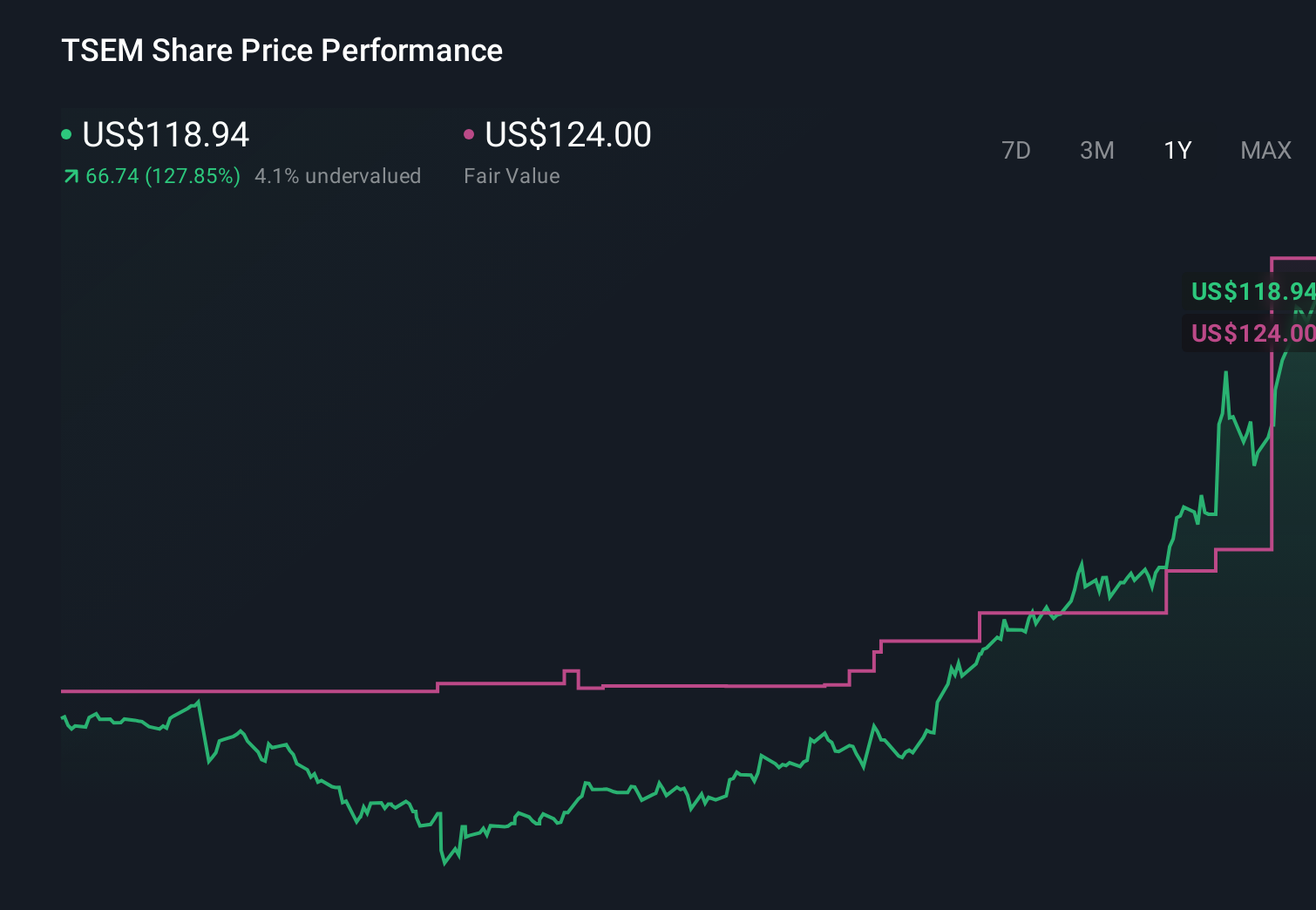
Similarly, $TSEM has seen significant market movement following the introduction of specialized AI photonics and power platforms, which are essential for the high-speed data transfer required in modern data centers. Teradyne ($TER) adds another layer to this ecosystem by focusing on automated semiconductor testing and collaborative robotics, ensuring that the increasingly complex chips produced for AI meet rigorous quality standards.
Tower Semiconductor AI Push Teradyne AI Robotics Upside
2. The Electric Vehicle and Energy Supply Chain
The transition to EVs and the expansion of AI data centers share a common bottleneck: power and raw materials. Texas Instruments ($TXN) is addressing this through the development of 800V DC power architectures, which are designed to improve efficiency in both next-generation data centers and EV charging systems.
On the material side, MP Materials ($MP) and Albemarle ($ALB) represent the "shovels" of the green energy transition. $MP is currently the largest producer of rare earth materials in the Western Hemisphere, specifically focusing on the NdPr magnets used in EV motors. Meanwhile, NextEra Energy ($NEE) serves as the utility backbone, providing the actual electrical capacity required to charge fleets and power the massive computational loads of AI firms.
3. Life Sciences and Biotech Infrastructure
In the biotechnology sector, individual drug success is notoriously difficult to predict. However, companies like Thermo Fisher Scientific ($TMO) and IQVIA ($IQV) provide the laboratory equipment and clinical data frameworks that virtually all pharmaceutical companies must use. This creates a "Life Sciences backbone" where the infrastructure providers benefit regardless of which specific drug candidate receives regulatory approval. Furthermore, specialized players like Establishment Labs ($ESTA) are finding growth through geographic expansion into high-demand markets like China.
Core Metrics and Market Positioning
The following table outlines the key "shovels" identified across these critical sectors:
| Ticker | Primary Sector | Key Infrastructure Role | Recent Performance/Catalyst |
|---|---|---|---|
| $AMAT | AI/Semiconductors | Chip Fabrication Materials | 15% Dividend Increase |
| $TSEM | AI/Semiconductors | Photonics & Power Platforms | 31.2% Recent Stock Surge |
| $TER | AI/Semiconductors | Automated Testing & Robotics | Expansion in AI Chip Testing |
| $TXN | Energy/Data Centers | Power Management (800V) | New Data Center Architecture |
| $NEE | Energy/Utilities | Grid Infrastructure | 26% Growth in Last 6 Months |
| $MP | EVs/Materials | Rare Earth Magnets | Largest Western Producer |
| $ALB | EVs/Materials | Lithium Production | Critical EV Battery Component |
| $TMO | Biotech | Laboratory Equipment | Universal Life Science Supplier |
| $IQV | Biotech | Clinical Trials & Data | Essential Regulatory Pipeline |
Analysis of Asymmetric Upside
The potential idea behind investing in these companies lies in their ability to "tax" every innovation within a sector. A discovery in this space is that while an AI chip designer might face stiff competition from a rival, both rivals typically require the same fabrication materials from $AMAT and the same testing protocols from $TER. This creates a possibility for asymmetric upside: the "shovel" company captures the aggregate growth of the entire sector, rather than being tied to the fate of a single brand.
Furthermore, these companies often trade at more stable valuations compared to the high-hype end-product companies. This is largely due to their diverse customer bases and high barriers to entry. For example, the multi-billion dollar investment required to compete in semiconductor testing or rare earth processing creates a significant moat that protects long-term positioning.
Risk Assessment and Considerations
Despite the potential for steady growth, investors should consider several specific risks associated with this strategy:
- Commodity Volatility: Companies like Albemarle ($ALB) are heavily influenced by the market price of lithium. Even if the demand for EVs remains high, a drop in lithium prices can negatively impact margins and stock performance.
- R&D Intensity: Staying relevant requires continuous, massive reinvestment. Companies like Applied Materials and Teradyne must spend billions on R&D to ensure their tools can handle the next generation of 2nm or 3nm chips.
- Regulatory Exposure: IQVIA ($IQV) and Thermo Fisher operate in highly regulated environments. Changes in FDA policies or global clinical trial standards can directly influence their revenue streams and pipeline management.
In conclusion, focusing on the infrastructure layer of major technological shifts offers a unique vantage point. By prioritizing the companies that provide the "physicality" to digital trends, there is a potential to build a portfolio that is resilient to the "wars" between end-product manufacturers while still participating in the overall advancement of the industry.
Resources & Context